

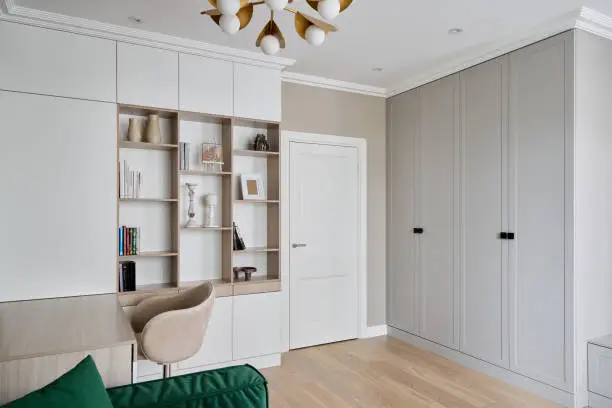
You cleaned the kitchen yesterday, but the counters are full again today. The shoes are back by the door. The laundry chair is covered again. The garage still feels crowded no matter how many times you reorganize it.
For many homeowners, clutter keeps returning even after cleaning. The problem is not laziness or lack of effort. Most of the time, the real issue is that the home was never designed with functional storage systems in mind. Cleaning removes visible mess temporarily. Home storage solutions solve the reason the mess keeps coming back.
Modern homes contain more items, more technology, and more daily activity than before. But many spaces still rely on basic shelving, limited cabinets, or layouts that do not support how families actually live. When storage does not match daily routines, clutter becomes part of the cycle.
Cleaning and Organizing Are Not the Same Thing

A clean home can still feel disorganized. This is because cleaning focuses on surfaces, while organization focuses on systems.
Many homeowners spend time moving items from one area to another without solving where those items truly belong. When objects do not have designated storage spaces, they eventually return to countertops, chairs, floors, or tables.
This creates a repeating pattern:
- Clean the space
- Temporarily hide clutter
- Use items again
- Clutter returns
The issue is not the cleaning habit. The issue is the lack of functional storage.
Why Clutter Keeps Returning
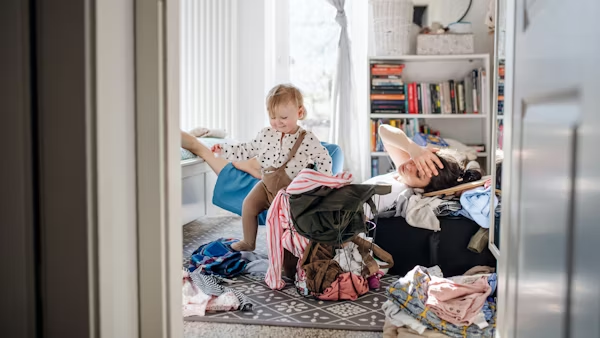
Clutter usually forms in the same areas of the home because those areas handle the most daily activity.
- Entryways collect shoes, bags, and jackets because there is no structured drop zone.
- Kitchens become crowded because pantry storage is limited or poorly organized.
- Laundry rooms overflow because supplies, baskets, and clothing share the same space without separation.
- Closets become difficult to maintain because they rely on a single shelf and rod system that cannot support real storage needs.
These are not cleaning problems. They are workflow problems. When homes lack systems that support routines, items naturally collect in the easiest available spaces.
The Hidden Stress of Visual Clutter
Clutter affects more than appearance. It changes how a home feels to live in. Read more.
Visual overload makes spaces feel unfinished, crowded, and harder to manage. Even small amounts of recurring clutter can create mental fatigue because the brain continues processing unfinished tasks and disorganization.
This is why many homeowners feel frustrated even after spending hours cleaning. The home may technically be clean, but it still does not feel calm or functional. Better storage design reduces this visual stress by giving items permanent, accessible spaces.
Homes Need Storage That Supports Real Life
Most standard storage layouts are too generic for modern households. A single hanging rod does not support shared closets. One pantry shelf does not support bulk groceries or appliances. A basic TV stand does not manage gaming systems, cables, routers, and accessories.
Functional storage works differently because it is designed around actual behavior. Instead of forcing homeowners to adapt to the space, the storage adapts to how the space is used.
This may include:
- Entry storage near the door for daily essentials
- Pull-out pantry shelving for visibility
- Double hanging closet sections for better clothing organization
- Mudroom cubbies for shoes and bags
- Built-in office storage for reducing desk clutter
- Hidden cable management in entertainment centers
The goal is not simply adding more storage. The goal is creating systems that reduce friction during everyday routines.
Why “More Space” Usually Does Not Solve the Problem
Many homeowners believe they simply need a larger house or more rooms. In reality, clutter often follows the same patterns regardless of square footage. Large homes can still feel disorganized when storage systems are inefficient. The issue is not always the amount of space available. It is how that space functions.
A smaller home with structured storage can feel calmer and easier to maintain than a larger home without organization systems.
This is why custom storage has become more important in modern homes, especially as rooms increasingly serve multiple functions.
The Shift Toward Functional Living Spaces
Homes today are expected to do more than before. A guest room may also function as an office. A laundry room may also act as a mudroom. Living rooms now contain workstations, entertainment systems, charging stations, and hidden tech storage.
Because of this, storage can no longer be treated as an afterthought. Modern homes need storage systems that support flexibility, accessibility, and changing routines.
The goal is not perfection. It is reducing the daily friction caused by clutter and disorganization.
How Functional Storage Changes Daily Routines
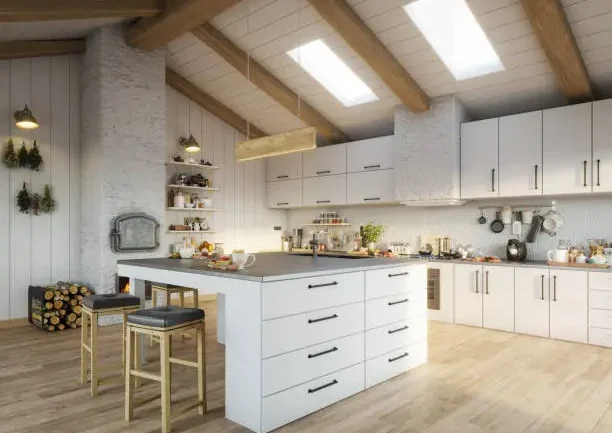
Well-designed storage improves more than organization. It changes how routines feel.
- Morning routines become faster when clothing and essentials are easy to access.
- Cooking becomes easier when pantry items are visible and grouped properly.
- Entryways stay cleaner when bags and shoes have dedicated spaces.
- Laundry feels more manageable when baskets, supplies, and folding areas are organized into zones.
Small improvements in layout can remove dozens of tiny frustrations that repeat every day. Over time, this creates a home that feels easier to maintain without constant cleaning. Get free estimate now!
Home Storage Solutions for DMV Homes
Homes across Washington D.C., Maryland, Virginia, and West Virginia often include layouts that were not designed for modern storage demands. Families need spaces that support changing routines, shared rooms, remote work, and multi-functional living.
Closet & Beyond designs custom home storage solutions that improve organization while supporting how homeowners actually use their spaces. Using personalized 3D design tools, layouts can be planned around workflow, accessibility, and long-term functionality.
As we serve Washington D.C., Maryland, Virginia and West Virginia, you can find our showrooms in the following locations:
Conclusion
If your home feels cluttered again shortly after cleaning, the problem may not be cleaning at all.
In many cases, clutter returns because the home lacks systems that support daily routines. Without functional storage, items naturally collect wherever space is available. Effective home storage solutions focus on how people actually live. They reduce friction, improve accessibility, and create structure that is easier to maintain over time.
The goal is not creating a perfect home. It is creating a home that functions better every day. Book a free consultation today!