

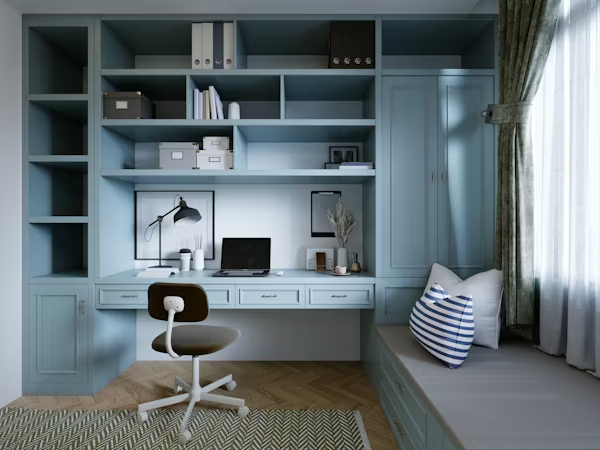
Working from home requires more than just a desk and a chair. A poorly organized workspace can make it difficult to focus, manage tasks, and stay productive throughout the day. Clutter, limited storage, and inefficient layouts often create unnecessary distractions.
A well-designed home office supports how you work. It keeps important items within reach, reduces visual clutter, and creates a structured environment that helps you stay focused. Even small changes in layout and storage can improve how the space functions.
In this article, we explore home office design ideas that improve workflow, maximize storage, and help create a workspace that supports daily productivity.
Designing a Home Office Around Your Workflow
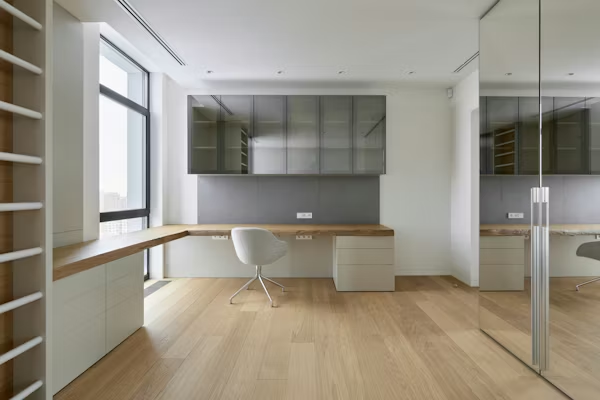
A home office should be built around how you use it. When the layout matches your daily tasks, it becomes easier to stay organized and focused.
Creating Functional Work Zones
Most home offices involve different types of tasks, such as computer work, paperwork, and storage. Dividing the space into zones helps keep these tasks organized. The main work zone should include your desk and essential tools. A secondary zone can store documents, supplies, or reference materials. If space allows, a separate area can be used for reading or planning tasks. Clear zones help reduce clutter and make it easier to switch between different activities.
Keeping Essentials Within Reach
Frequently used items should be placed near your primary work area. This includes documents, office supplies, and devices you use daily. When items are too far away, it interrupts your workflow and adds unnecessary movement. Keeping essentials within reach helps maintain focus and efficiency. A well-planned layout ensures that everything you need is accessible without overcrowding the desk.
Storage Solutions That Support Productivity
Storage plays a key role in maintaining an organized workspace. Without proper storage, clutter can quickly build up and affect how the office functions. (Read more)
Using Cabinets to Reduce Visual Clutter
Cabinets provide enclosed storage for items that do not need to be visible at all times. This includes paperwork, office supplies, and equipment. Keeping these items behind cabinet doors helps maintain a clean and organized appearance. It also reduces distractions by limiting visual clutter in the workspace. Closed storage is especially useful in smaller home offices where space is limited.
Open Shelving for Quick Access
Open shelving allows easy access to frequently used items such as books, folders, and documents. It also provides space for simple décor that can make the office feel more comfortable. Shelving should be arranged in a way that keeps important items within reach while avoiding overcrowding. Adjustable shelves can help adapt the space as storage needs change. A balance between open and closed storage helps create a functional and organized office.
Smart Layout Ideas for Small Home Offices
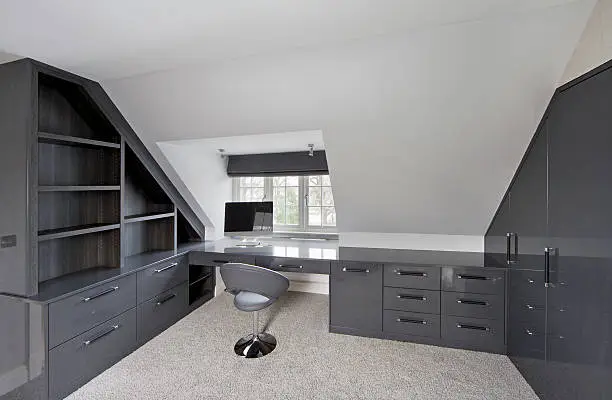
Not every home has a dedicated office room. Many workspaces are created within bedrooms, living areas, or multi-purpose rooms.
Maximizing Vertical Space
Vertical storage helps increase capacity without using additional floor space. Wall-mounted shelves and cabinets can store office supplies while keeping the workspace clear. Upper storage can hold items that are not used daily, while lower sections remain accessible for frequent use. This approach keeps the room organized without making it feel crowded. Using vertical space effectively is essential in compact home offices.
Creating Multi-Purpose Workspaces
Some rooms must serve more than one function. A home office may also be used as a guest room or study area. In these cases, storage systems help keep work materials organized and contained. Cabinets, drawers, and shelving allow the office to remain functional without interfering with other uses of the room. A flexible layout ensures the space remains practical throughout the day.
Design Details That Improve Comfort and Focus
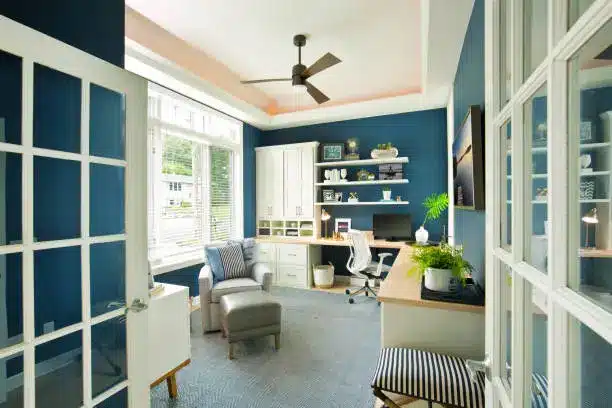
Beyond layout and storage, small design details can influence how comfortable and productive a workspace feels.
Lighting That Supports Productivity
Lighting plays an important role in reducing eye strain and improving focus. A combination of natural light and task lighting helps create a balanced workspace. Desk lamps and overhead lighting should be positioned to minimize shadows and glare. Proper lighting makes it easier to work for longer periods without discomfort. A well-lit office also feels more open and inviting.
Materials and Finishes That Reduce Distraction
The choice of materials can affect how the space feels. Clean, consistent finishes help create a calm environment that supports focus. Avoiding overly busy patterns or cluttered surfaces can reduce distractions. Smooth, durable materials also make the workspace easier to maintain. A simple and structured design helps keep attention on tasks rather than surroundings.
Custom Home Office Solutions for DMV Homes
Homes across Washington D.C., Maryland, Virginia, and West Virginia include a variety of layouts, from compact apartments to larger houses. Custom storage systems help adapt home offices to these different spaces.
Closet & Beyond designs home office storage solutions that maximize functionality while maintaining a clean and organized layout. Using personalized 3D design tools, homeowners can visualize how cabinets, shelves, and work areas will fit into their space before installation.
As we serve Washington D.C., Maryland, Virginia and West Virginia, you can find our showrooms in the following locations:
Visiting a showroom allows homeowners to explore different layouts and storage options for their home office.
Conclusion
A well-designed home office supports focus, organization, and productivity. When the layout is built around your workflow, daily tasks become easier to manage and less time is spent dealing with clutter.
By combining efficient storage, thoughtful layout planning, and practical design details, you can create a workspace that works with your routine. Even small changes can improve how the space functions.
If you are planning to upgrade your home office, a custom design can help you create a workspace that fits your needs and supports your daily workflow. Consider scheduling a consultation to explore options tailored to your home. Book a free consultation now!
Frequently Aasked Questions (FAQs)
What is the best layout for a home office?
The best layout depends on your space and workflow. A functional layout keeps essential items within reach while maintaining clear work zones.
How can I make my home office more organized?
Using cabinets, shelves, and drawers helps keep items in designated spaces. Reducing clutter improves focus and efficiency.
Can a home office work in a small space?
Yes, small spaces can function well with vertical storage and efficient layouts. Wall-mounted shelves and compact desks help maximize space.
What storage is needed in a home office?
Common storage includes cabinets for supplies, shelves for books, and drawers for smaller items. These features help keep the workspace organized.
How does lighting affect productivity in a home office?
Good lighting reduces eye strain and improves visibility. A well-lit workspace helps maintain focus and supports longer work sessions.