

Choosing the right closet system can affect how your space functions every day. Many homeowners compare custom closet vs prefab closet options when planning storage upgrades. While both provide organization, they differ in design, flexibility, and long-term usability.
Prefab closets are often pre-made and designed for standard spaces. Custom closets are built to match specific room dimensions and storage needs. Understanding these differences helps homeowners make a more informed decision. In this article, we compare custom closet vs prefab closet systems, including design, storage capacity, and overall functionality. This will help you determine which option fits your space and lifestyle.
Understanding Custom and Prefab Closet Systems

Closet systems are not all designed the same way. The main difference between custom and prefab closets lies in how they are built and installed.
What Is a Custom Closet?
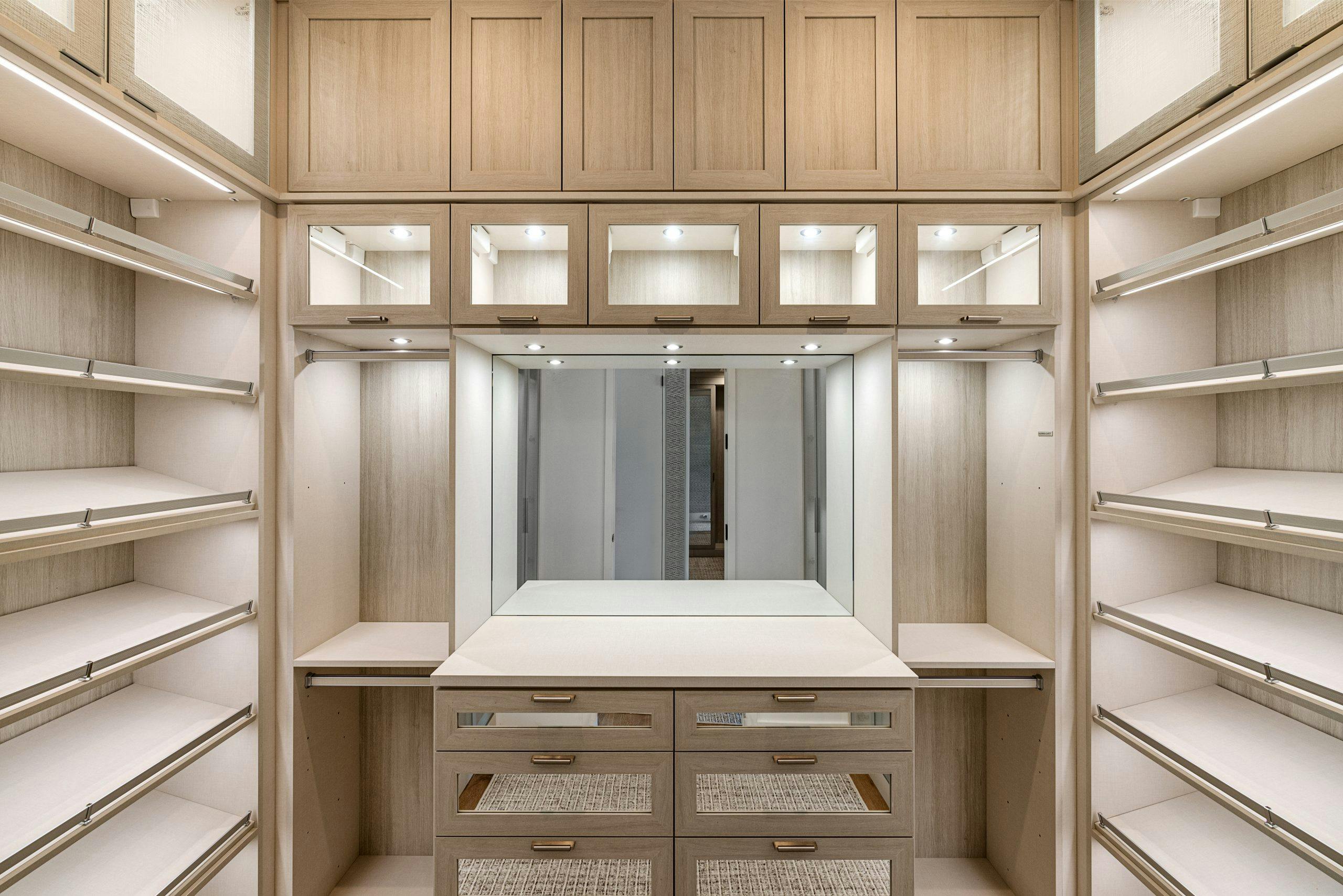
A custom closet is designed specifically for your space. It is built based on your closet dimensions, storage needs, and layout preferences. Custom systems often include adjustable shelving, built-in drawers, and tailored hanging sections. Every part of the closet is planned to maximize space and improve organization. Because the system is made to fit your room, it reduces unused areas and improves accessibility.
What Is a Prefab Closet?
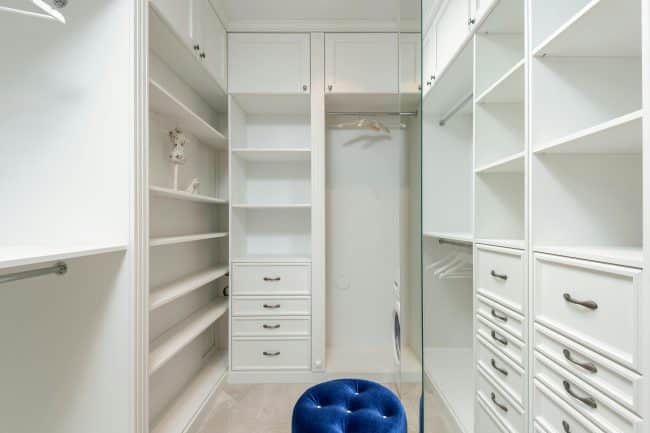
A prefab closet, also known as a modular closet, is a pre-manufactured system. It comes in standard sizes and configurations. These systems are typically easier to install and may work well in basic closet spaces. However, they may not fully utilize all available space, especially in rooms with unique layouts. Prefab closets are often used for quick upgrades but may offer limited flexibility over time.
Key Differences Between Custom and Prefab Closets
Understanding how these two options differ can help you choose the right system for your home. Each has advantages depending on your space and needs.
Fit and Space Utilization
Custom closets are built to match exact dimensions. This allows every inch of the closet to be used effectively. Corners, vertical space, and narrow sections can all be incorporated into the design. Prefab closets are designed for standard measurements. This can lead to unused gaps or limited storage in irregular spaces. While they can still improve organization, they may not fully maximize the area. For small or uniquely shaped closets, custom systems usually provide better space utilization.
Flexibility and Design Options
Custom closets offer more design flexibility. Homeowners can choose the number of shelves, drawers, and hanging sections based on their storage needs. Prefab systems typically have fixed configurations. While some components may be adjustable, the overall design is limited compared to custom solutions. This difference becomes more noticeable as storage needs change over time.
Storage Efficiency and Organization
Storage efficiency is one of the main reasons homeowners upgrade their closets. The ability to organize items properly can improve daily routines.
Custom Closets for Organized Storage
Custom closets divide space into specific zones. These zones can be designed for hanging clothes, folded items, shoes, and accessories. Because the layout is tailored, it becomes easier to maintain organization. Items have designated spaces, which reduces clutter. Custom systems also allow for future adjustments as storage needs evolve.
Prefab Closets for Basic Organization
Prefab closets provide basic storage solutions that improve organization compared to standard closets. They typically include shelves and hanging rods. However, the lack of customization may limit how effectively items are stored. Some areas may become overcrowded while others remain underused. For simple storage needs, prefab closets can still be a practical option.
Long-Term Value and Practical Use

When choosing between custom closet vs prefab closet systems, it is important to consider long-term usability.
Durability and Material Quality
Custom closets often use higher-quality materials designed for long-term use. These systems are built to handle daily wear while maintaining structure and appearance. Prefab closets may vary in material quality depending on the product. Some systems are durable, while others may not hold up as well over time. Material choice plays an important role in how long the closet system remains functional.
Adapting to Changing Needs
Custom closets are designed with flexibility in mind. Adjustable components allow homeowners to modify the layout as their storage needs change. Prefab closets may offer limited adaptability. While some shelves can be adjusted, the overall system may not support major changes. For households with evolving storage needs, custom closets often provide better long-term usability.
Choosing the Right Closet for Your Home
The right choice depends on your space, budget, and storage requirements. Both custom and prefab closets can improve organization, but they serve different purposes. Custom closets are ideal for homeowners who want a tailored solution that maximizes space and adapts over time. Prefab closets are suitable for quick upgrades and standard layouts. Understanding how each system works helps you make a decision based on your priorities.
Custom Closet Solutions for DMV Homes
Homes across Washington D.C., Maryland, Virginia, and West Virginia have different layouts and storage challenges. Custom closet systems allow homeowners to design storage that fits their specific space.
Closet & Beyond uses personalized 3D design tools to help homeowners visualize their closet layout before installation. This allows adjustments to be made to improve functionality and organization.
As we serve Washington D.C., Maryland, Virginia and West Virginia, you can find our showrooms in the following locations:
Visiting a showroom allows homeowners to explore materials, layouts, and storage features before making a decision.
Conclusion
Choosing between a custom closet vs prefab closet depends on how you plan to use your space. Custom closets provide a tailored solution that maximizes storage and adapts to your needs. Prefab closets offer a more standard option that can improve organization quickly.
For long-term efficiency and better space utilization, custom closet systems often provide greater flexibility. They allow homeowners to create a layout that supports daily routines and reduces clutter.
If you are planning to upgrade your closet, consider exploring custom design options to create a system that fits your home and lifestyle. Book a free consultation today!
Frequently Asked Questions (FAQs)
What is the main difference between custom and prefab closets?
Custom closets are designed specifically for your space, while prefab closets come in standard sizes and configurations. Custom systems offer better fit and flexibility.
Are custom closets more efficient than prefab closets?
Custom closets often use space more efficiently because they are built to match exact dimensions. This helps reduce unused areas and improve organization.
Can prefab closets be adjusted?
Some prefab closets have adjustable shelves, but their overall design is limited. They may not adapt as easily as custom systems.
Which option is better for small spaces?
Custom closets are usually better for small spaces because they maximize every inch. Prefab closets may leave unused gaps in smaller or irregular layouts.
Are custom closets worth it for long-term use?
Custom closets are often more suitable for long-term use because they are durable and adaptable. They can evolve with changing storage needs.