

Every home reflects a personal philosophy about space, belongings, and daily life. Some homeowners value simplicity and restraint, while others embrace abundance and expression. Closet design plays a critical role in supporting these contrasting lifestyles. When storage aligns with a home’s design mindset, organization feels natural rather than forced.
Understanding the Difference Between Minimalist and Maximalist Living

Minimalist and maximalist homes are shaped by very different priorities. Minimalist spaces focus on clarity, intention, and fewer possessions. Maximalist homes celebrate variety, collections, and visual richness. Closet design must reflect these differences to remain functional and harmonious.
Minimalist closets prioritize breathing room and simplicity. Maximalist closets prioritize capacity and flexibility. Both require thoughtful planning to avoid clutter and stress. Understanding the mindset behind each style is the foundation of effective closet design.
The Minimalist Approach to Space and Belongings
Minimalism values purpose over quantity. Items are kept only if they serve a clear function or bring meaning. Closet design must reinforce this clarity by avoiding overcrowding. Storage should feel open, calm, and easy to maintain.
Minimalist closets often emphasize clean lines and negative space. Fewer items require more intentional placement. This creates visual calm and reduces decision fatigue. Organization becomes a daily support rather than a task.
The Maximalist Approach to Expression and Collection
Maximalism embraces abundance and personality. Clothing, accessories, and collections are part of self-expression. Closets must support variety without becoming chaotic. Storage should feel structured even when full.
Maximalist closets benefit from clear categorization. When everything has a place, abundance feels curated rather than cluttered. Design helps transform collections into organized displays. Function keeps creativity under control. Get an instant quote now!
Designing Closet Layouts for Minimalist Homes
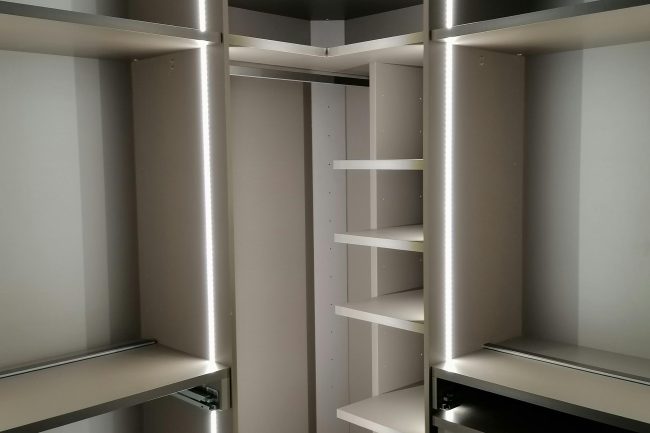
Minimalist closet design focuses on restraint and efficiency. Storage is intentional, not excessive. The goal is to support simplicity while maintaining daily comfort. Thoughtful layout choices reinforce a calm environment.
Minimalist closets often use fewer components but higher precision. Every shelf, rod, and drawer has a purpose. This prevents unused or wasted space. The result is a closet that feels light and effortless.
Creating Open Space and Visual Calm
Minimalist closets benefit from open layouts. Space between items allows the eye to rest. This visual breathing room reduces stress and overwhelm. Organization feels intuitive and peaceful.
Clear sightlines make it easier to maintain order. When clutter is visible, it is addressed quickly. Storage supports awareness rather than hiding excess. Calm design encourages consistency.
Prioritizing Function Over Volume
Minimalist closets focus on what is used regularly. Storage is designed around core essentials. Extra capacity is avoided to prevent accumulation. This reinforces intentional living.
Functional design reduces unnecessary choices. Fewer options simplify daily routines. The closet becomes a tool for clarity. Organization supports the minimalist mindset. Make an appointment with us now!
Designing Closet Layouts for Maximalist Homes

Maximalist closet design must accommodate abundance without chaos. Storage should provide structure, not restriction. The goal is to celebrate variety while maintaining order. Thoughtful design transforms fullness into functionality.
Maximalist closets often require more zones and compartments. Categorization becomes essential. Storage must adapt to changing collections. Flexibility ensures long-term usability.
Creating Zones for Large and Diverse Collections
Maximalist closets benefit from clearly defined zones. Clothing, accessories, and specialty items each need dedicated areas. This prevents visual overwhelm. Organization helps collections feel curated.
Zones make maintenance easier. Items return to their designated places. Clutter is less likely to spread. Structure supports creativity without limiting it.
Balancing Accessibility With Storage Capacity
High capacity storage must remain accessible. Poor design can make items hard to reach or forget. Thoughtful layouts ensure visibility even in full closets. Accessibility keeps the closet functional.
When items are easy to see, they are more likely to be used. This prevents overbuying and neglect. Design supports mindful enjoyment of abundance. Storage works with lifestyle rather than against it.
Why Custom Closet Design Is Essential for Both Styles

One-size-fits-all storage rarely works for any home. Minimalist and maximalist lifestyles require different solutions. Custom closet design adapts to habits, volume, and preferences. This ensures long-term satisfaction.
Custom storage evolves as lifestyles change. Minimalists may shift phases, and maximalists may refine collections. Flexible systems support both journeys. Design remains relevant over time.
Designing Storage Around Real-Life Habits
Custom closets reflect how homeowners actually live. Storage aligns with routines rather than assumptions. This reduces friction and frustration. Organization becomes easier to maintain.
When storage matches behavior, clutter decreases naturally. Systems support daily habits. Long-term order feels achievable. Design becomes a quiet ally.
Creating Balance Between Aesthetics and Function
Both minimalist and maximalist homes value beauty. Custom design ensures storage enhances the home’s aesthetic. Function does not compromise style. Balance creates harmony.
Closets feel intentional and integrated. They support the home’s identity. Design reinforces lifestyle values. Storage becomes part of the overall experience.
As we serve Washington D.C., Maryland, Virginia and West Virginia, you can find our showrooms in the following locations:
Frequently Asked Questions (FAQs)
1. Can minimalist homes still benefit from custom closets?
Yes, custom closets support intentional storage. They help maintain clarity and simplicity. Design prevents clutter from returning.
2. Do maximalist homes need more storage than minimalist ones?
Maximalist homes often require higher capacity storage. Organization and zoning are especially important. Design keeps collections manageable.
3. Can a closet design change if my lifestyle shifts?
Yes, custom systems can adapt over time. Adjustable components support change. Storage evolves with your needs.
4. How does closet design affect daily routines?
Proper design reduces decision fatigue and frustration. Items are easier to find and return. Routines become smoother.
5. Why is custom design better than standard closet systems?
Custom design reflects real habits and volume. Standard systems often waste space or create frustration. Custom closets support long-term organization.
Conclusion: Closet Design Should Reflect How You Live
Minimalist and maximalist homes require different approaches to storage. Closet design works best when it aligns with personal habits and values. Custom closets from Closet & Beyond are designed to support both simplicity and abundance with equal care. Book a free consultation today and create a closet that truly reflects your way of living.