


Sharing a closet with your life partner is not an easy task, particularly when you have different needs in the storage, different styles of the wardrobe, and different organization manners. The first one may like long dresses hung in open space whereas the other one may be much dependant on folded stacks and drawers. Such a deviation without a plan may soon result in clutter, confusion, and even some friction. When it comes to a custom closet system, however, balance can be created, personal zones established, and every inch of space made to work for both partners.
Designing Separate Zones Within One Closet

Creating a shared closet that works for both people begins with thoughtful zoning. Rather than blending all items together, a custom design allows for clear divisions that reflect each person’s wardrobe type, habits, and style. With smart planning, both users can enjoy equal access and tailored features without feeling like they’ve lost space to the other.
Dividing Space Based on Lifestyle and Wardrobe
The initial step of designing a common closet is to evaluate the individual requirements of both partners. One individual might require longer hanging rods because he/she has more formal attire whereas the other individual might require deep drawers to store his/her gym clothes or casual wear. Planning space allocation to the various types of wardrobes will allow both you and your partner to have sufficient wardrobe space without any one partner losing out to the other. It is also more efficient in the way that daily routines are organized because everybody knows where their stuff is.
Using Color or Material Contrast to Define Zones
One of the most effective methods of separating closet spaces is by the use of contrasting finishes, materials or accent colors. As an example, the lighter wood finish could be one side and the darker shelving and matte black pulls on the other. These design clues do not only provide a visual limit but also allow each of the partners to have a feeling of possession of their part. The outcome is a cohesive but individualized space that continues to feel cohesive in general.
Accommodating Varied Wardrobe Types
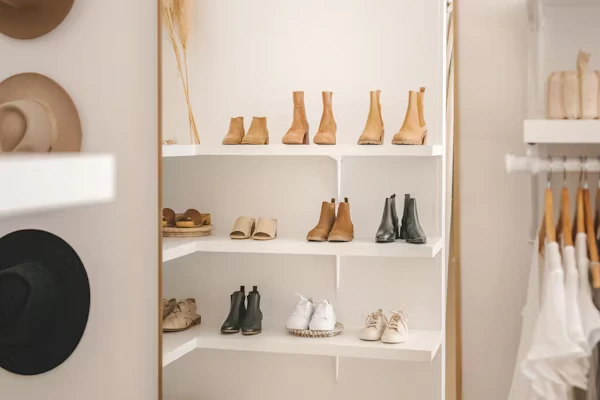
Closets are never one-size-fits-all, and that’s especially true when two people share the same space. Designing with both wardrobes in mind ensures that each type of clothing and accessory has a dedicated home.
Long-Hang Sections for Dresses vs. Folded Storage for Casual Wear
The partner who has dresses, coats or other long items has a special long-hang to maintain items wrinkle free and easily accessible. In the meantime, folded storage suits jeans, sweaters and casual clothes that do not have to be hung. The use of both forms of storage in the design of the closet will ensure functionality of both types of wardrobes. Such a balance eliminates the annoyance of attempting to stuff long clothing into short-hang spaces or stuffing folded clothing into awkward gaps.
Shoe Racks for One, Accessory Drawers for Another
Whereas one of you may need a huge collection of shoes that may need to be stored in tiered racks, the other may need drawers to store accessories such as belts, watches or scarves. A custom closet may combine the two without losing floor space. Shoe walls, cubbies or pull out racks are used to store and display footwear and accessory drawers provide compartmentalized storage of smaller items. This considerate practice makes both the partners able to keep their zones in order. Get an instant quote now!
Integrating Personalized Storage Features
No two wardrobes are identical, which is why customizable features make a huge difference in a shared closet. The goal is to add convenience while reflecting each user’s personal habits.
Jewelry Drawers, Watch Organizers, or Tie Racks
In the case of one of the partners wearing jewelry every day, a lined drawer with specific compartments will hold necklaces untangled and earrings without losing them. In the case of the other, a watch organizer or tie rack will keep these items in place and ready to put on. Such dedicated characteristics make sure that small items do not end up in general storage. They also create a luxurious feel to the closet.
Mirrors, Lighting, and Built-In Seating Options
Both users will find it convenient when outfit selection is made easier by integrated mirrors either full-length or in cabinet doors. Lighting, including LED strips in the shelves and overhead lamps, is needed to give visibility and improve the atmosphere in the closet. Include built-in seats, such as a padded bench, so each partner has a handy place to wear shoes or lay out clothes to wear on a day. These details transform the area not only to one that is functional but to one that is fun.
Managing Clutter with Shared Organization Systems
Even the most beautiful closet can become chaotic without proper systems in place. A shared organization strategy helps both partners keep the space neat and prevents disputes over messiness.
Central Laundry Baskets and Shared Seasonal Bins
A clever idea is to have a central laundry bin that can be used by both partners so that such dirty clothes do not end up on the floor. Seasonal bins may be used to hold out-of-season clothing so that prime space can be used to store in-season wardrobe. With these bigger storage options, couples do not end up with bulky items and yet they are organized since they share. This is particularly efficient in smaller closets where space is limited.
Labeling and Categorizing for Consistency
There is no need to label only the rooms of kids, it does magic in adult shared closets as well. Bins, drawers and shelves are clearly labeled so that both partners can put their items back in their place. The process of getting what you want is also faster because you can classify, be it a winter scarf or a particular pair of shoes. This will help a lot in eliminating the fight of missing items.
Closet Systems That Reduce Conflict

A well-designed closet isn’t just about storage—it’s also about harmony. When both partners’ needs are respected in the design, there’s less room for frustration.
Clearly Defined Personal Sections Avoid Overlap
Assigning each partner a designated section removes ambiguity about where items should go. This eliminates the “who took my space?” debates that often arise in shared closets. Whether it’s a left/right split or upper/lower arrangement, having clear boundaries fosters mutual respect for each other’s belongings. It also makes reorganizing or cleaning much easier.
Custom Solutions Tailored to Individual Habits
Every person has unique habits—some like to hang every item, while others prefer folding. A custom closet can accommodate both approaches in one unified space. By tailoring each section to the individual’s habits, the design encourages maintenance and minimizes clutter. This personalized touch helps ensure that the closet stays functional over time. Make an appointment with us!
Adding Style Without Compromising Function
Closets should feel like an extension of the home’s design, not just a storage room. With the right materials and finishes, you can create a stylish space that still serves both partners’ needs.
Unified Design with Varied Functionality
Even with separate zones, a shared closet can have a cohesive look through matching base materials and finishes. Behind the unified façade, the functionality can differ greatly from one side to the other. This approach allows each partner to enjoy their preferred features without clashing visually. The result is a space that looks curated yet works individually.
Coordinated Finishes for Aesthetic Harmony
Choosing complementary hardware, lighting, and shelving finishes ensures the closet feels harmonious. For example, both sides might share brushed nickel hardware, even if the shelving colors differ. These subtle ties bring the whole space together visually. The aesthetic balance enhances the closet’s appeal and makes it feel like a thoughtfully designed part of the home.
As we serve Washington D.C., Maryland, Virginia and West Virginia, you can find our showrooms in the following locations:
Frequently Asked Questions (FAQs)
Can a custom closet work for couples with very different styles?
Yes, custom closets take into consideration various preferences. Individual features, finishes and storage types can be incorporated into each partner without losing the overall unity of the design. An experienced designer is capable of combining two styles that would seem purposeful and balanced. This will make both partners feel represented as well as comfortable in the common space.
How do you divide a closet fairly between two people?
This is most appropriate by evaluating the wardrobe and storage requirements of each individual and then coming up with the layout. Space can either be equally or proportionately according to the number of clothing and accessories possessed by each individual. The boundaries can be defined with the use of visual clues such as finishes or color contrasts. This will make the arrangement fair and prevent conflicts in future.
What if one person has more clothes than the other?
Here, an equal share of space is best. The one who has more clothes may have extra hanging space or drawers and the other may have extra space to store accessories or change of season. It is all about communication- both of the partners must concur with the arrangement. It is possible to make a custom closet that would help maintain the balance and fairness of the layout despite the inequality among the wardrobes.
How do you keep a shared closet organized long-term?
Regular systems of organization, like labeling, sorting, and regular decluttering, are necessary. Both partners are supposed to make it a point of ensuring that they put things back to their respective places. Common bins or central hampers are useful in order maintenance. Consistent reviews might help to make sure that the closet still suits the needs of both partners.
Can a single custom closet serve both partners’ unique needs?
Yes, when it is well planned. Special items such as adjustable shelving, custom hanging areas, and special storage accessories can suit the habits of both the partners. A common closet can operate even when the wardrobes are different. The point is customization which does not interfere with the style and routine of every person.
A shared closet doesn’t have to be a source of tension. With thoughtful design, personalized storage solutions, and clearly defined zones, couples can enjoy a functional and stylish space that meets both partners’ needs. By combining aesthetics with practicality, your custom closet can truly become a harmonious part of your home.
Ready to transform your shared closet into a space you both love? Contact Closet & Beyond today for a free consultation and discover how a custom solution can bring balance, beauty, and function to your home.