

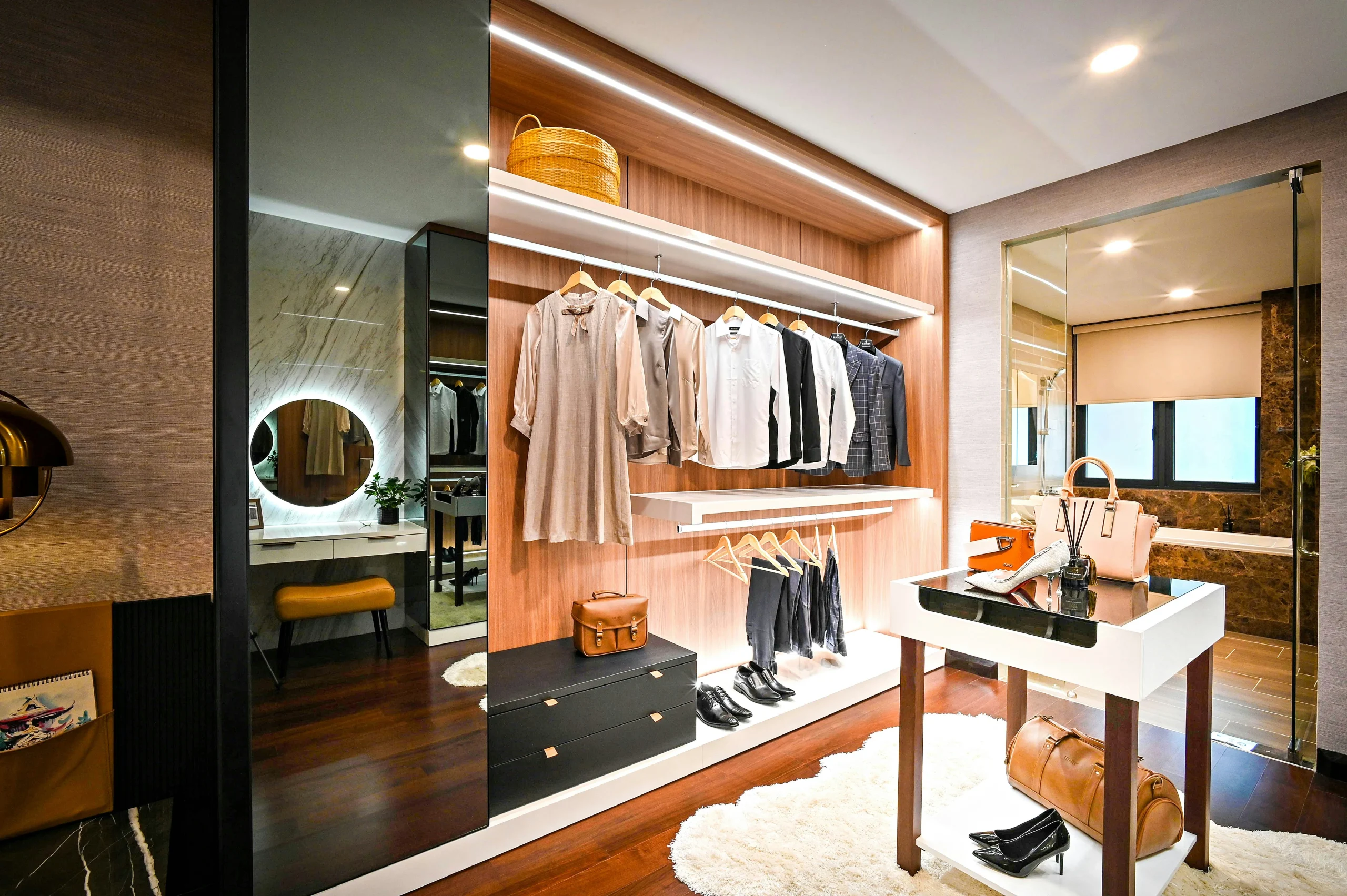
When it comes to designing or remodeling a closet, dimensions play a crucial role in both function and aesthetics. Whether you’re working with a compact reach-in or planning a luxurious walk-in, knowing the right closet dimensions helps you make the most of your space. At Closet & Beyond, we specialize in creating custom closet solutions that maximize storage, style, and usability—starting with getting the measurements just right.
In this guide, we’ll walk you through all the standard closet dimensions you need to know, along with design tips to help you plan a space that’s both efficient and beautiful.
Why Closet Dimensions Matter
Closets are not just storage, they’re critical parts of everyday organization. The wrong dimensions can result in wasted space, poor accessibility, and aggravation. Conversely, properly designed closets with accurate measurements form an efficient, functional space that fits your lifestyle.
Knowing the standard sizes guarantees your closet will both have space for the types of items you need to store, as well as allow proper clearance, visibility, and usability. When working with a contractor or sitting down with our design team, knowing the basics gives you an edge when planning.
Closet Types
Reach-In Closets
Reach-in closets are common in bedrooms, hallways, and guest rooms. They are ideal for compact areas and are designed for quick, convenient access to hanging and shelf space.
Standard Dimensions:
Depth: Minimum of 24 inches (deeper if storing bulky clothing like coats)
Width: Typically 3 to 8 feet
Height: Generally 8 feet, or ceiling height
A well-designed reach-in closet often includes double hanging rods, a top shelf, and perhaps drawers or cubbies to maximize vertical space.
Walk-In Closets
Walk-in closets offer ample space and are often custom-designed to fit the homeowner’s specific needs. They are common in master bedrooms or dressing rooms and can be modest or even lavish in scale.
Standard Dimensions:
Depth & Width: 5 x 5 feet minimum (small walk-in); larger plans can be 7 x 10 feet or more
Height: Usually ceiling height, 8 to 9 feet
Walk-ins allow for the inclusion of several storage elements like shoe racks, islands, seating, mirrors, and special sections for accessories.
Wardrobe Closets
Wardrobe closets are standalone pieces of furniture that provide closet space without the use of built-in area. They are especially useful in areas that lack closet space.
Standard Dimensions:
Depth: 24 inches
Width: Varies between 24 to 96 inches
Height: 72 to 96 inches
Wardrobe closets can either be freestanding or wall-mounted and offer flexible design possibilities depending on room size and needs.

Dimensional Details
Depth Measurements
Closet depth is important for the proper fit of hangers and clothing. At a minimum, 24 inches of depth is suggested for hanging garments. For longer items such as coats or suits, a closet that is 26 to 28 inches deep offers more suitable space.
For sliding door closets, include an inch or two for comfortable sliding. Shallower closets (18-22 inches) are suitable for linens or folded goods but are not practical for hanging.
Width and Height Standards
The width of your closet will determine how many storage sections, rods, or shelving units will fit comfortably. Standard widths are:
Reach-in: 36–96 inches
Walk-in: 60-inch minimum per wall for shelving/hanging with walk-through clearance
Wardrobes: Modular widths ranging from 24 to 96 inches
Height is usually determined by ceiling height, but for planning purposes:
Top shelves usually go 84 inches above the floor
Double hanging rods are installed at 40 inches (lower rod) and 80 inches (upper rod)
Single rods for long garments are often placed at 65 to 70 inches
Space Planning Tips
Consideration of Clearance and Accessibility
Allow sufficient clearance for doors, drawers, and movement around the space. In walk-in closets, 24 to 30 inches of inner clearance is ideal between opposing walls or units. Take measurements accordingly if your closet includes drawers or swinging doors to prevent blocking.
Accessibility is also important—store items you use on a daily basis at waist to shoulder level for easy access.

Layout Configurations
Good closet designs revolve around your use of the space. Some popular design layouts include:
Single Wall Layout: Best for narrow reach-ins
L-Shaped Layout: Utilizes two adjacent walls for more storage
U-Shaped Layout: Surrounds the user with storage on three sides, best for walk-ins
Island Layout: Larger closets can incorporate a center island for folded goods, accessories, or seating
Closet & Beyond designs each layout with function and comfort in mind so that you can easily move around the space while still having ample storage.
Visual Cohesiveness
Measurements and storage are paramount, but aesthetics matter too. A well-designed closet will contribute to your home’s overall style and resale value. Choose consistent finishes and materials that will coordinate with your existing interior design.
To think about:
Matching hardware and cabinetry
Built-in lighting
Mirrored doors to add dimension and function
Neutral colors for timeless style
Final Thoughts
Understanding standard closet sizes allows you to design a closet that works for your needs—whether that is for everyday functionality, seasonal storage, or a luxury dressing room. At Closet & Beyond, our expert designers are available to help you design a custom storage solution tailored to your space, lifestyle, and style.
Ready to transform your closet? Contact Closet & Beyond today to schedule a free consultation and see what is possible.