

There is a corner of most living rooms that quietly tells the truth about how a home was put together.
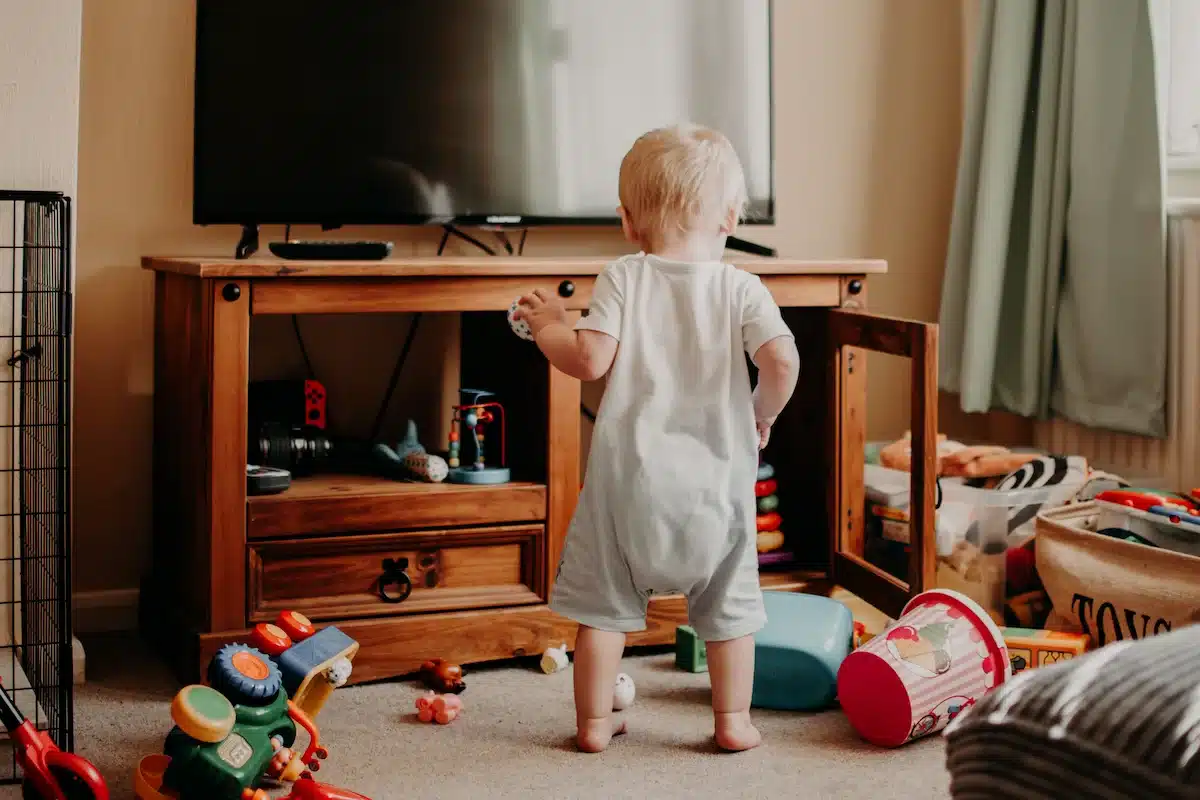
The television is mounted — or resting on something — and around it, the equipment has accumulated. A streaming device here. A gaming console there. A soundbar in front. Remotes on whatever surface was closest. Cables running down the wall or pooling behind the stand in a way that never looks quite right, no matter how many times you tuck them back.
None of it is a crisis. The TV works. The room functions. But every time guests arrive, there is a small, barely acknowledged awareness that this corner of the room — the corner that everyone faces when they sit down — does not quite match the rest of what the home is trying to be.
That awareness is not vanity. It is a reasonable response to visual noise. And it is exactly the problem that well-designed media center solutions are built to resolve — not by hiding the technology, but by giving it a proper architectural home.
At Closet & Beyond, we design and build custom media center solutions for homeowners across Virginia, Maryland, and Washington D.C. The result is a living room where the entertainment wall stops being the space that needs apologizing for and starts being the space that sets the tone for everything around it.
Here is everything worth understanding about what that transformation actually involves, and why the difference between a piece of furniture and a true built-in media center solutions matters more than most people initially expect.
The Living Room Problem Nobody Names Directly
Ask most homeowners what bothers them about their living room and they will describe the entertainment area — even if they do not frame it that way.
The cables that never stay hidden. The console that has no real home. The shelving that holds too much but organizes nothing. The remote controls that live somewhere in the couch cushions because there is no designated place for them. The decorative items that got pushed aside when the streaming device needed to be plugged in and never made it back.
What is really being described in all of those complaints is the same underlying issue: the entertainment area was never actually designed. It evolved, device by device, year by year, from a television and a stand into something that now occupies the most visually prominent wall in the room without looking like it belongs there.
Interior designers have a phrase for what this creates: visual noise. Unlike physical clutter, which is obvious and easy to identify, visual noise is the kind of background disorder that a room carries even after it has been tidied. The eye keeps returning to it. It registers as incompleteness — a sense that the room is not quite finished, even when nothing is technically wrong.
The living room is the space in a home that absorbs more collective hours than almost any other. Morning coffee, evening wind-downs, weekends, gatherings, family movie nights. When the room’s central wall — the wall that every piece of furniture points toward — carries visual noise instead of visual calm, the room never fully delivers on what it could be.
Custom media center solutions address this at the design level, not the organizational level. The goal is not to tidy the existing setup more carefully. It is to build a system where everything has a proper place from the beginning.
What Custom Media Center Solutions Actually Do
The distinction between a furniture-based entertainment setup and genuine custom media center solutions is architectural.
A television stand, even a well-chosen one, is a piece of furniture. It holds the TV and perhaps the equipment below it. It sits against the wall. The cables run from it to the outlets. The wall above it and beside it remains empty or carries things that were placed there without a cohesive plan.
Custom media center solutions treat the wall itself as the design element.
Floor-to-ceiling cabinetry frames the television on all sides, creating a built-in unit that reads as part of the room’s architecture rather than furniture placed in front of it. Integrated LED lighting beneath shelves and inside display sections creates depth and warmth that makes the whole wall feel considered rather than assembled.
The television — regardless of its size — becomes one element within a larger designed composition, rather than the object that everything else orbits. The cables are routed internally, managed completely out of sight. The remotes, the devices, the accessories — all of it has a designated home.
What changes in the room is immediate and significant. The wall stops generating visual noise and starts anchoring the room visually. Guests notice it. The homeowner notices it every day. And the room, without any other changes, begins to feel finished in a way it likely never did before.

The Elements That Define a Great Media Center Solution
Integrated Cable Management
Cables are the single most persistent visual problem in any entertainment setup, and they are also the element most completely solved by properly designed media center solutions.
Custom cabinetry routes cables internally — through the structure of the unit itself — so that nothing is visible from the front of the room. Power connections, HDMI cables, speaker wires, device connections — all of it travels through designated channels inside the cabinet, emerging only at the specific points where each device is located. The front of the unit stays clean. The back of the unit is organized rather than tangled.
For homeowners across McLean, Bethesda, and Great Falls who have spent years managing cables with adhesive clips, wire sleeves, and cable covers that never quite work, this element alone generates some of the strongest reactions of any design feature we incorporate. The visual calm it creates is immediate and impossible to replicate any other way.
Concealed Equipment Storage
Every entertainment setup accumulates equipment that needs to be accessible without being constantly visible.
Streaming devices. Gaming consoles. Sound systems. Receivers. Router and networking equipment. Cable boxes. Blu-ray players. In most living rooms, this equipment either sits in the open — visible, reminding everyone it is there — or gets crammed behind a door in a way that makes it difficult to access and creates heat management problems.
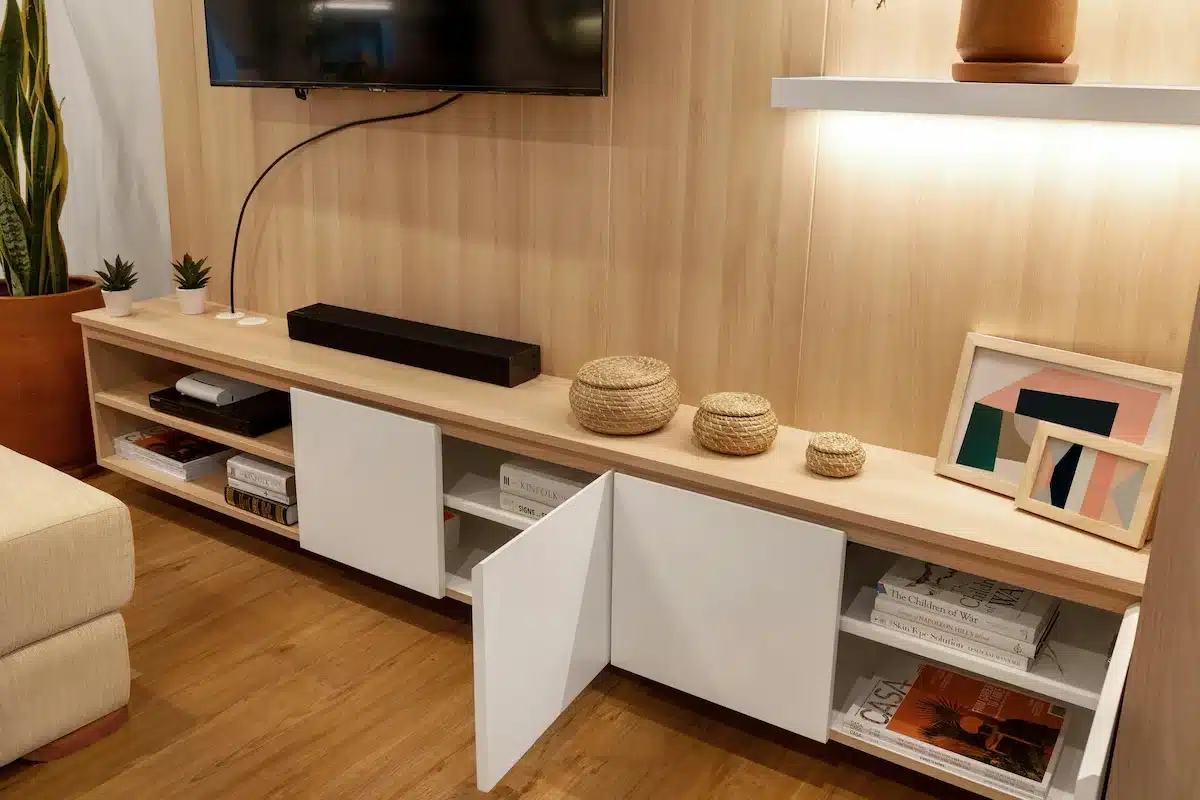
Custom media center solutions incorporate dedicated equipment zones — cabinetry sections designed specifically for electronic devices, with ventilation built into the design to prevent overheating, cable access points at the back, and doors or drawer fronts that keep the zone completely concealed when not in use. Each device has a logical, accessible home. The front of the media center remains visually clean.
Display Shelving and Decorative Zones
One of the most consistent observations luxury home designers make about built-in media center solutions is that they transform the entertainment wall from a technology zone into a room feature.
Open shelving sections — positioned beside and above the television — create space for the books, artwork, collected objects, and decorative items that give a living room its character. When those items are displayed within a designed cabinetry system rather than on standalone shelves or surfaces, they feel curated rather than accumulated. The media center becomes a backdrop for the room’s identity rather than just the thing that holds the television.
Integrated LED lighting beneath shelves adds warmth to the display and creates a visual depth that makes the wall feel layered and considered at any time of day — including evenings when ambient room lighting is low and the soft glow of the cabinetry creates an atmosphere that no freestanding furniture can replicate.
Fireplace Integration
One of the strongest design trends in living room media center solutions right now — and one of the most requested features we incorporate across the DMV luxury market — is fireplace integration.
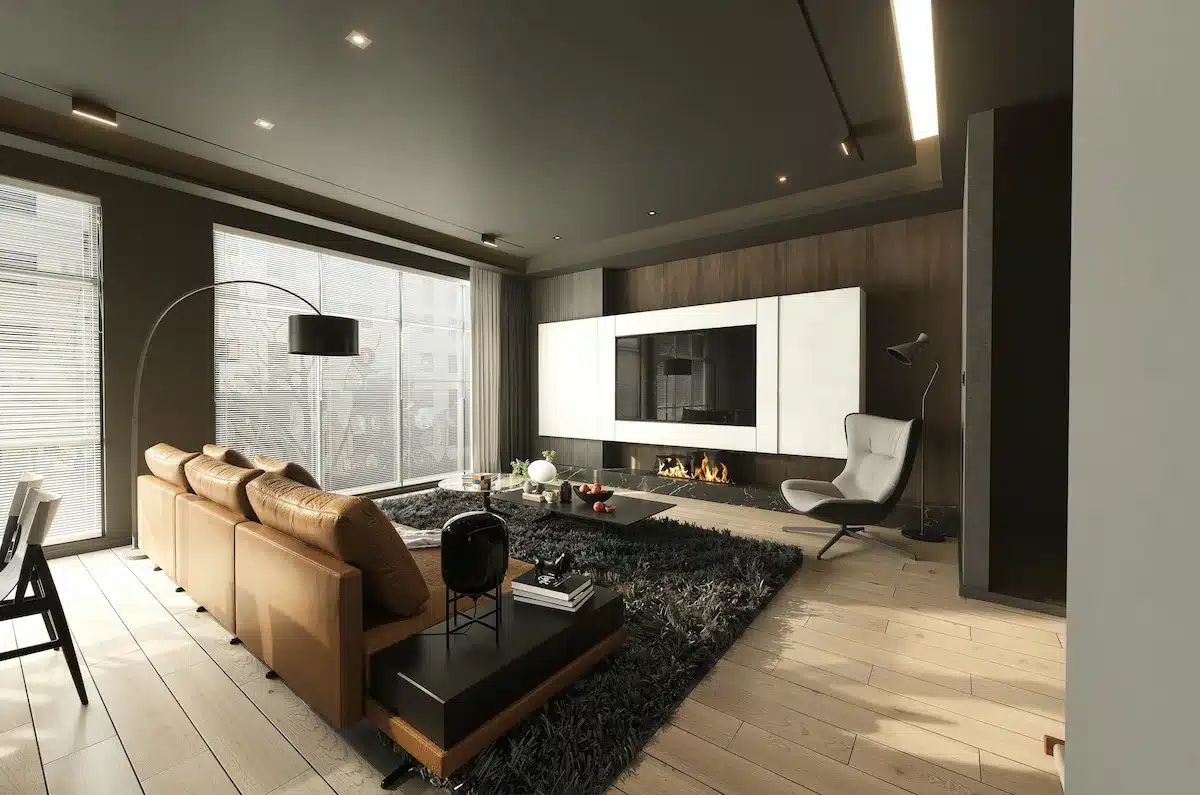
A built-in electric or gas fireplace centered within a media wall creates a focal point that combines two of the room’s most emotionally resonant elements: warmth and entertainment. The television is framed above the fireplace within the cabinetry system. The combination creates a wall that commands the room in the way that great interior design always has — through architectural presence rather than decorative effort.
For larger living rooms in Potomac, Great Falls, and McLean where a single media center wall might span twelve to sixteen feet, a fireplace integrated at the center of the design creates a sense of scale and intention that no freestanding solution can approach.

Glass Doors and Display Cabinetry
Not everything in a media center needs to be concealed. The way a living room feels is shaped in part by what is visible — and how it is displayed.
Glass-fronted cabinet sections within media center solutions allow certain items to be seen while still being protected and organized — collectibles, curated book collections, barware, decorative objects that the homeowner wants present in the room without sitting in the open. The glass front keeps the visual reading of the wall consistent while creating a sense of layered depth that flat closed cabinetry alone cannot achieve.
For homeowners with meaningful collections — books, artwork, memorabilia, family objects — glass display sections within the media center create the kind of visual storytelling that makes a living room feel genuinely personal.
Ambient LED Lighting Systems
Lighting inside media center solutions does more than illuminate shelves. It shapes the emotional atmosphere of the entire room.
Integrated LED strips beneath shelving sections cast a soft, warm light that adds depth to the wall and creates a visual presence in the evening hours that makes the living room feel deliberately designed. Color temperature matters here — warm white tones (2700K to 3000K) create the soft, residential atmosphere of a well-appointed room, while cooler temperatures would make the space feel more clinical. The right lighting temperature makes the media center glow rather than glare, and it makes the room feel more considered at the end of the day when ambient lighting is lower and the built-in illumination becomes the mood of the space.

2026 Media Center Design Trends in the DMV
The design language around media center solutions is shifting meaningfully right now, and the trends emerging in 2026 are worth understanding — not because trends should drive every decision, but because they reflect something real about where luxury living room design is heading.
The media wall is replacing the entertainment center. The bulky freestanding units that dominated living rooms through the early 2000s have given way entirely to built-in media wall systems that treat the entire wall as the design canvas. In 2026, the best media center solutions no longer look like furniture placed against a wall — they look like the wall itself was designed around the television.
Quiet luxury materials are defining the aesthetic. Rift-sawn white oak, walnut veneer, and matte laminates are leading material choices this year. The highly glossy surfaces that felt modern a decade ago are being replaced by finishes that feel warmer, calmer, and more aligned with how luxury home design broadly is moving — toward restraint, texture, and timelessness rather than visual drama.
Japandi influence is arriving in entertainment design. The blend of Japanese minimalism and Scandinavian warmth — clean lines using warm woods like oak or walnut, organic textures, visual quiet — is shaping media center aesthetics in ways that feel genuinely fresh. The result is a media wall that feels grounded and calm rather than tech-forward and cold.
Symmetry is making a strong return. Equal sections flanking the television, matching lighting on both sides, consistent shelf spacing — media center solutions as a measured, considered wall rather than an eclectic collection of elements.
Why the Living Room Focal Wall Matters More Than Any Other Wall
Every well-designed room has a focal point — an element that the eye moves toward first, that anchors the space, and that everything else in the room relates to.
In most living rooms, the entertainment wall is the focal wall by default. The television is large. The seating faces it. The room’s traffic patterns organize around it. Whether the focal wall was designed to carry that role or not, it is already carrying it.
The question is simply whether it is doing that job well.
A poorly designed focal wall — one that carries visual noise, cable clutter, mismatched equipment, and no sense of architectural coherence — creates a living room that feels perpetually unfinished. A well-designed focal wall built around custom media center solutions creates a room that feels complete and considered from the moment you walk in.
That completeness is what homeowners in McLean, Bethesda, Georgetown, and Potomac are increasingly asking for. Not just a cleaner entertainment setup, but a living room that functions at the level of the home around it — where the most-used wall in the most-used room reflects the same standard of design as everything else.

Media Center Solutions Across the DMV Area
Closet & Beyond has designed and installed media center solutions throughout Northern Virginia, Maryland, and Washington D.C. for homeowners with very different living rooms, very different design sensibilities, and very different ideas of what the finished space should feel like.
In McLean and Great Falls, media center solutions often span full living room walls — twelve to sixteen feet of cabinetry incorporating fireplace integration, display shelving, closed equipment storage, and ambient lighting that makes the living room the visual and functional centerpiece of a larger home.
In Arlington and Alexandria, where condos and townhomes require smarter use of limited wall space, media center solutions focus on vertical efficiency — floor-to-ceiling cabinetry that makes a compact wall feel designed and complete without overwhelming the room’s proportions.
In Bethesda and Potomac, family-oriented living rooms often require media center solutions that handle the full range of household entertainment — gaming consoles, streaming equipment, large television configurations, family memorabilia — all organized within a system that looks polished even when the room is actively in use.
In Georgetown and Kalorama, where historic architecture creates specific aesthetic constraints, media center solutions are designed with materials and profiles that respect the architectural character of the home — built-ins that feel like they could have always been there, never like something imported from a different design world.
Whatever the market, whatever the room, the design process starts the same way: a free consultation where we understand how the household actually uses the space and what the room is currently missing.
Explore our media center solutions →
See our full range of custom storage solutions →
Frequently Asked Questions About Media Center Solutions
What is the difference between custom media center solutions and a regular entertainment center?
A freestanding entertainment center is furniture — it sits against a wall and can be moved or replaced. Custom media center solutions are built into the room itself, treating the wall as the design canvas. The result looks and feels architectural — like the cabinetry has always been part of the home — and it handles cable management, equipment storage, lighting, and display in ways that freestanding furniture fundamentally cannot.
How does cable management work in a built-in media center?
Cables are routed through the interior structure of the cabinetry itself — through designated channels that connect equipment zones to power sources and to the television without any cable being visible from the front of the unit. The installation includes planning every cable run before the unit goes in, so nothing is improvised after the fact.
Can a media center solution work in a smaller living room?
Consistently, yes. Many of the most effective media center solutions we build are in compact living rooms in Arlington condos, Alexandria townhomes, and D.C. residences where wall space is limited. Custom design means the unit is built precisely for the available dimensions — using vertical space intelligently, keeping proportions appropriate to the room, and creating a finished result that makes the space feel larger rather than more crowded.
Can a fireplace be incorporated into a media center?
Yes, and it is one of our most frequently requested design elements across the DMV luxury market. Electric fireplace inserts integrate cleanly into a built-in media wall, creating a focal point that combines warmth, visual presence, and entertainment function in a single cohesive unit.
Will a built-in media center add value to my home?
A professionally installed built-in media center is treated as a permanent improvement to the property — not removable furniture — and is recognized by buyers as an architectural feature. In the DMV luxury market, where buyers have detailed expectations about the design quality of the homes they consider, a well-executed media center wall consistently registers as a meaningful upgrade that signals the home was thoughtfully designed.
How long does the process take from consultation to installation?
The free design consultation and same-day 3D rendering happen first. Once the design is approved, most media center solutions are produced and installed within three weeks. Installation is typically completed in a single visit.
The Room That Finally Looks the Way It Should
Most living rooms carry a version of the same quiet problem. The entertainment wall — the wall the room is organized around — was never designed. It accumulated. And no amount of organizing or tidying makes an undesigned wall feel finished.
Custom media center solutions from Closet & Beyond give that wall the architectural intention it has always needed. The cables disappear. The equipment finds its proper place. The display shelving holds the objects that give the room its character. The integrated lighting adds warmth to the evenings. And the room — without any other changes — feels like a different space.
That is what design does when it is applied to the right problem.
Book your free design consultation today →
Call us at (703) 810-3821 — we offer in-home, virtual, and showroom consultations throughout Virginia, Maryland, and Washington D.C. Your 3D design and same-day cost estimate are included, no commitment required.