


Nobody fully understands how much a baby owns until they have to figure out where to put all of it.
Newborn onesies sorted by size. Swaddles in three different fabrics. Tiny socks that disappear the moment you stop watching them. Diapers, wipes, extra sheets, burp cloths, seasonal layers that will fit for exactly six weeks before they need to be replaced by the next size up. And somewhere underneath all of that, the larger clothes someone gave you as a gift — the ones the baby will not fit into for another four months — that need a home right now because there is nowhere else to put them.
The nursery closet, usually a standard reach-in with a single rod and one shelf, was never designed for any of this. It holds what it holds and leaves everything else to pile up on the dresser, the changing table, the floor near the crib, or the basket that started as a temporary solution and became a permanent fixture.
That is where thoughtful baby closet solutions make a real difference — not just in how the nursery looks, but in how manageable the daily routine of caring for a newborn actually feels. At Closet & Beyond, we design and install custom baby closet solutions for families across Virginia, Maryland, and Washington D.C. that work for the earliest weeks of a child’s life and keep working as the child grows
Why the Nursery Closet Matters More Than Parents Expect
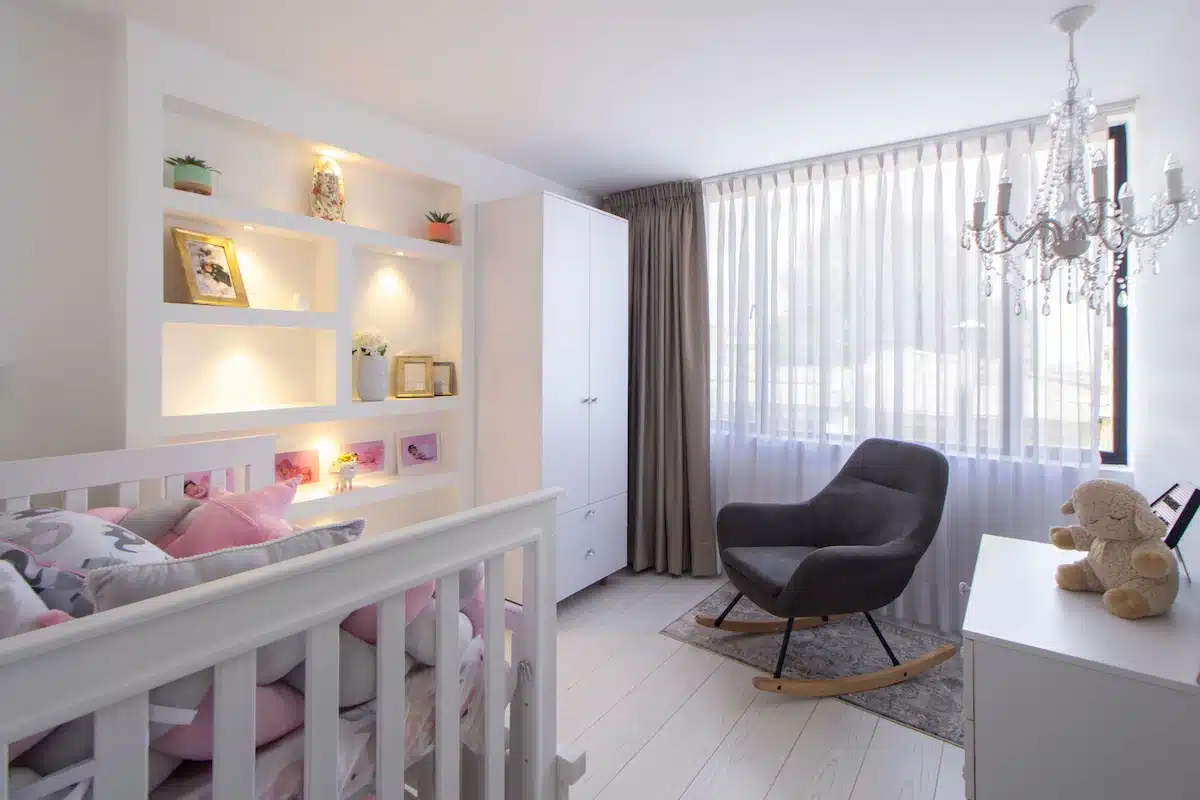
Most expectant parents spend significant time thinking about the nursery itself — the paint color, the crib, the lighting, the theme, the way the room will feel when they carry their baby through the door for the first time.
The closet tends to be an afterthought. It gets organized quickly in the final weeks before the due date, usually with whatever bins and hanging organizers were available, and then immediately overwhelmed once the baby actually arrives.
This is not a failure of effort. It is a failure of design. Standard nursery closets — a single hanging rod and a shelf, sometimes two — were not built for the volume and variety of what a new baby requires. Baby clothing alone comes in four or five size ranges within the first year. Each range overlaps slightly with the next, meaning multiple sizes need to be accessible at the same time. Add in the accessories, the bedding, the seasonal items, the diapering supplies, and the miscellaneous gifts that accumulate in the first weeks, and a closet that seemed manageable before the baby arrived becomes a daily source of frustration almost immediately.
Custom baby closet solutions solve this at the design level. They create a system that holds everything the nursery requires — organized by category, accessible in the dark during a 3 a.m. feeding, and built to adapt as the child’s needs shift through infancy, toddlerhood, and beyond.
What Custom Baby Closet Solutions Actually Include
Double Hanging Rods for Size Rotation
The single most practical element in any custom baby closet solution is double hanging rods — two levels of hanging space where a standard closet has one.
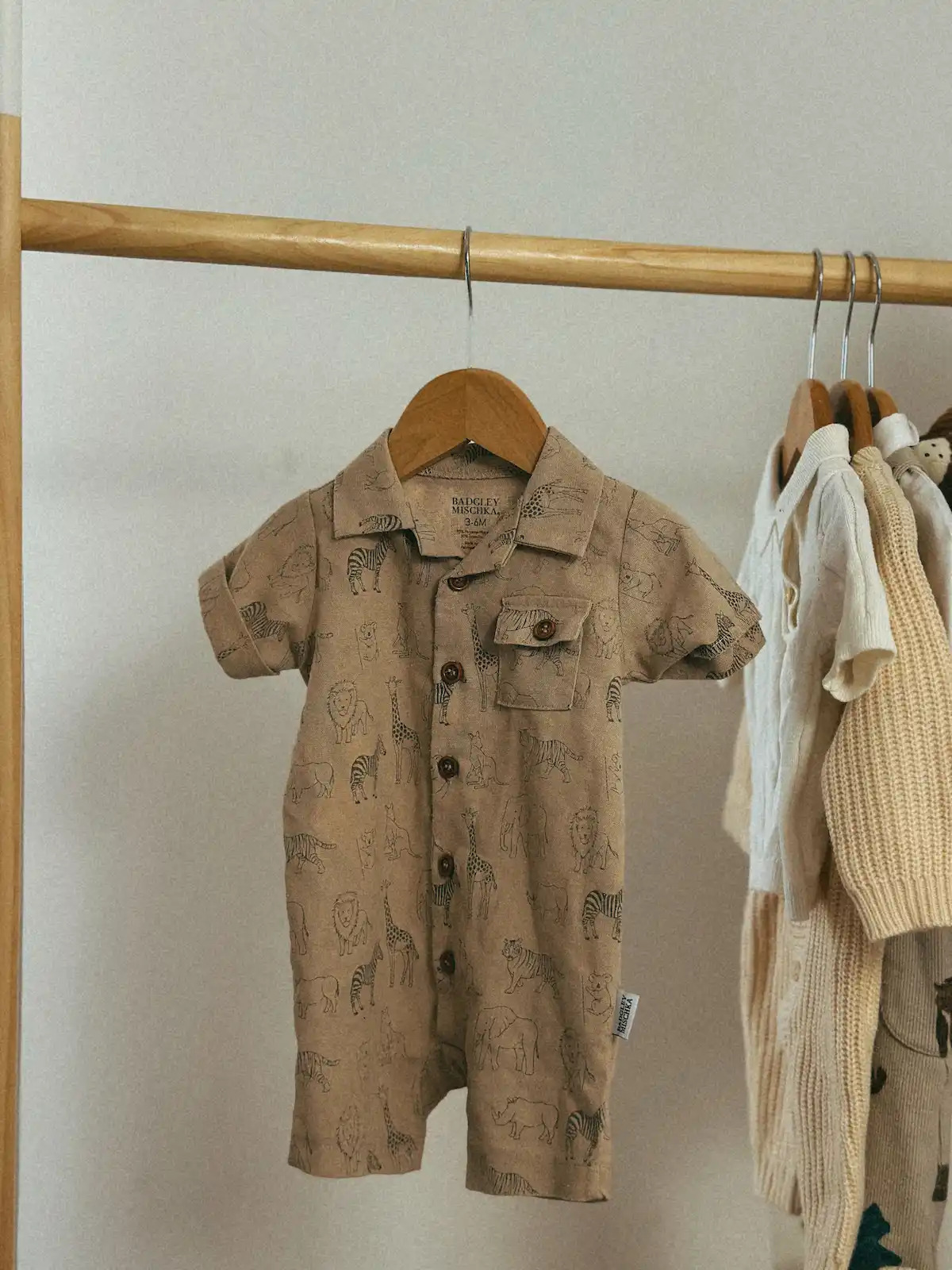
Baby and infant clothing is short. A single rod at standard height hangs adult garments efficiently. For tiny onesies, sleepers, and infant outfits, it leaves the lower half of the closet completely unused. Double hanging rods change the entire capacity of the space — one rod for the current size, one for the incoming size, both accessible without sorting through a single shared rail.
As the child grows and clothing gets longer, the lower rod can be removed or repositioned, adapting the closet to the new wardrobe without requiring a full redesign.
Adjustable Shelving for Changing Needs
A baby’s storage needs shift every few months in the first two years of life. What the closet needs to hold in the newborn stage — swaddles, sleep sacks, burp cloths, diapering supplies — is completely different from what it needs to hold at eighteen months — shoes, hats, toys, books, growing layers of clothing across multiple seasons.
Custom baby closet solutions use adjustable shelving that can be reconfigured as those needs change. Shelves that held folded newborn onesies get repositioned to accommodate toddler shoes and picture books. The system grows with the child instead of requiring a new solution every year.
For families across Bethesda, McLean, and Fairfax who are planning a nursery they expect the room to grow with, adjustable shelving is one of the most forward-thinking elements of the design.
Dedicated Drawer Systems
Folded baby items — socks, onesies, bibs, burp cloths, pajamas — get lost in deep shelves faster than almost anything else in a nursery. They migrate to the back. They get buried under the next item. At 2 a.m., when a clean onesie is needed immediately, hunting through an unorganized shelf is the last thing a new parent has the patience for.
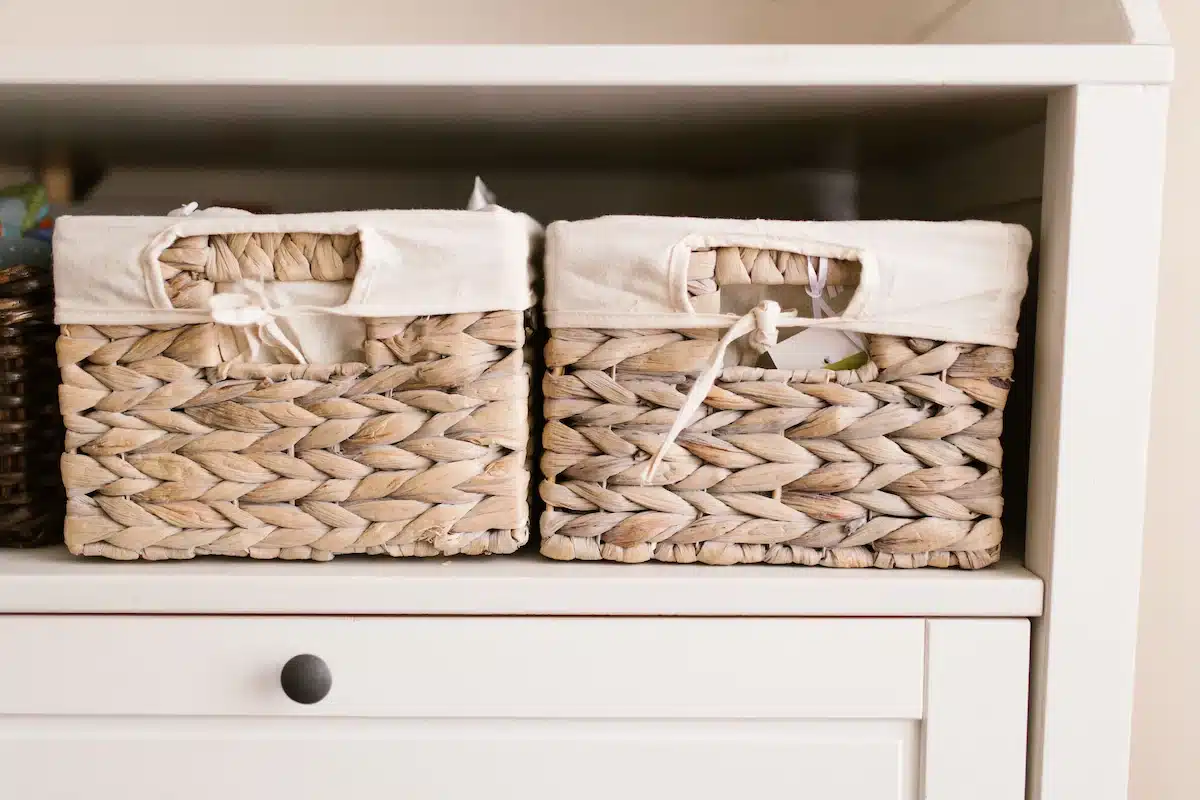
Built-in drawer systems within custom baby closet solutions solve this specifically. Shallow drawers sized for small folded items keep categories separated, visible, and accessible. Socks have their own drawer. Bibs have their own drawer. The items used most frequently in nighttime routines stay within arm’s reach, in a place that always makes sense to check first.
Shoe Storage and Accessory Organization
Baby shoes are small enough to disappear between any two other objects they are placed near. Hats, headbands, hair accessories, and the dozens of tiny items that accumulate in the first year of a child’s life have a way of occupying every surface in the nursery unless they have a designated place.
Custom baby closet solutions incorporate low shoe shelving sized for small footwear, hooks for frequently used accessories, and small storage sections for the category of item that tends to collect without any real home. The result is a closet where everything is findable — including the matching shoe.

Specialty Items — Cap Racks, Headband Holders, and Accessories
Closet & Beyond incorporates specialty organization items into baby closet solutions that address the specific small-item challenges of a nursery wardrobe. Cap racks keep hats visible and accessible without crushing them. Headband holders organize the accessories that otherwise end up in a tangled pile at the back of a drawer. Small hooks at appropriate heights handle frequently used bags, carriers, and accessories.
These are not extravagant additions. They are the elements that make a nursery closet feel genuinely organized rather than just tidied — because there is a difference between organizing around what storage you have and building storage around what you actually need.
Baby Closet Solutions That Adapt as Children Grow
One of the most important design principles behind Closet & Beyond’s baby closet solutions is adaptability.
The nursery of a newborn becomes the bedroom of a toddler, then a school-age child, then eventually a teenager with a full wardrobe, a growing book collection, and storage needs that look almost nothing like what they were on day one. A closet designed only for the newborn stage creates a problem eighteen months later. A closet designed to grow with the child creates a solution that remains relevant for years.
The adjustable components in our baby closet solutions — shelving that repositions, hanging configurations that can be changed, drawer systems that hold different categories as those categories evolve — mean that the design investment made before the baby arrives continues paying off through the full arc of childhood.
For families in Great Falls, Potomac, and Vienna who are designing a nursery with the long view in mind, this adaptability is one of the strongest arguments for custom baby closet solutions over off-the-shelf systems that become outdated in a year.
What 2026 Nursery Design Is Teaching Us About Closet Storage
The direction nursery design is moving in 2026 is genuinely worth paying attention to — not because trends should drive every decision, but because this year’s shifts reflect something meaningful about how parents are thinking about the spaces their children grow up in.
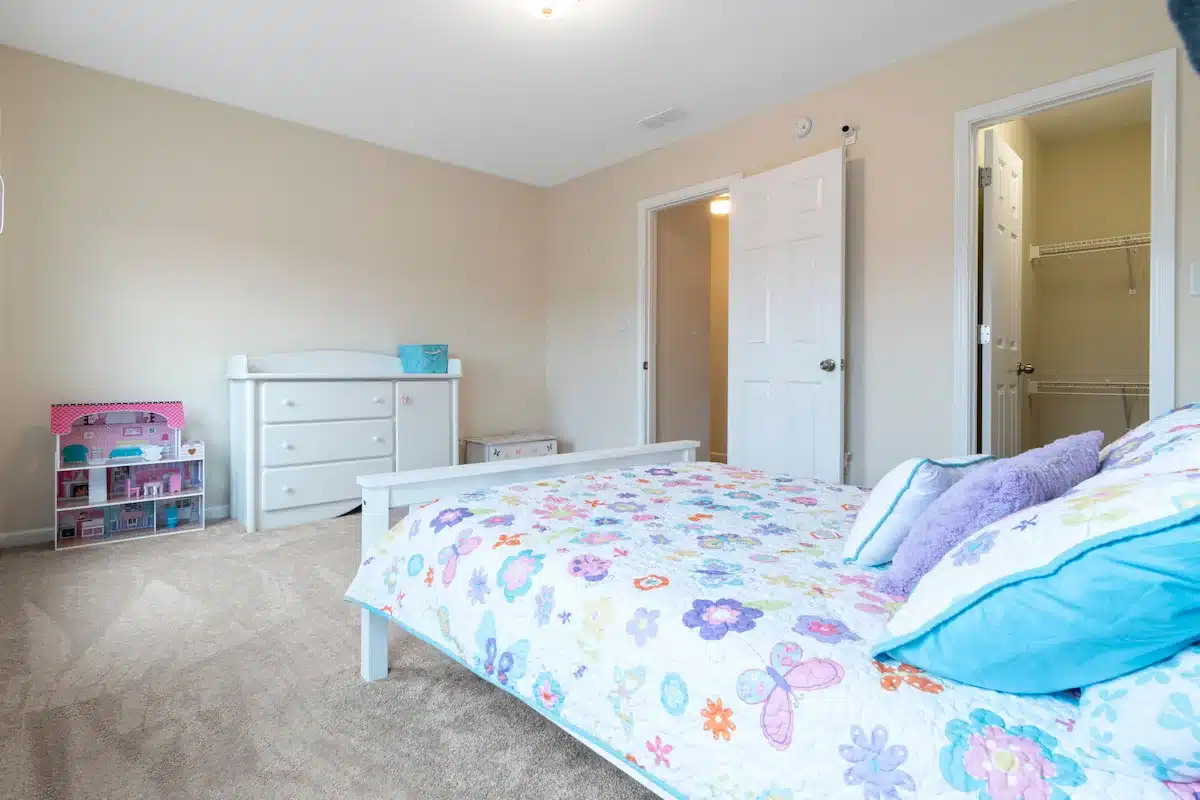
Quiet luxury is arriving in the nursery. The loud, theme-heavy nurseries of previous years are giving way to rooms built around a feeling rather than a concept — calm, warm, intentional spaces that use natural materials, soft palettes, and quality construction. That philosophy extends directly to storage. Baby closet solutions built with care, quality materials, and clean design fits this direction perfectly.
The key focus is to be adaptable. Parents in 2026 are opting for furniture and storage options that can be adapted to the child’s changing needs from infancy to the school years and beyond, instead of switching every few years to new, different furniture.
Warm materials over clinical white. For nurseries, 2026 design is shifting to wood finishes, with warm stains like oak, ash and natural finishes dominating the scene alongside clean white cabinetry. Baby closet solutions with warm wood accents don’t come across as institutional, but more like part of a well-designed home.
Lighting matters in the nursery closet. Soft, warm integrated lighting inside a baby closet makes nighttime routines measurably easier. Being able to see clearly at 3 a.m. without turning on overhead lights that wake the baby is a practical consideration that parents learn to value quickly.
Frequently Asked Questions About Baby Closet Solutions
When should I set up my baby’s closet?
Before the baby arrives, ideally. The weeks immediately after birth are not the time to be reconfiguring storage. Having custom baby closet solutions in place before the due date means the nursery is ready to absorb everything from the first day home — and parents are not trying to solve an organization problem while also adjusting to a newborn.
How is a custom baby closet solution different from a store-bought organizer?
Store-bought organizers are built to standard dimensions and standard assumptions about what a nursery needs. Custom baby closet solutions are built around your specific closet dimensions, your specific wardrobe volume, and how your household actually operates — including the nighttime routines, the size rotation schedule, and the items you reach for most frequently. The difference shows up immediately in daily use.
Can baby closet solutions work in a small nursery?
A smaller closet is often where custom design makes the biggest difference. Standard organizers often waste space in compact closets because they were not designed for those specific dimensions. Custom baby closet solutions use every inch of the available space — floor to ceiling, wall to wall — creating storage capacity that a generic system cannot approach in the same footprint.
Will the closet design still work when my child is older?
That is one of the core principles of the baby closet solutions Closet & Beyond builds. Adjustable shelving, reconfigurable hanging sections, and adaptable drawer systems mean the closet grows with the child. The design that holds newborn onesies today is the same structure that holds a school-age wardrobe several years from now — reconfigured rather than replaced.
How does the consultation and installation process work?
It starts with a free consultation — in-home, virtual, or at our Fairfax showroom. Our designers learn how you use the space and what the nursery needs to hold. A 3D rendering and detailed cost estimate are provided the same day. Installation typically happens within three weeks of design approval and is usually completed in a single visit.
Designing Nurseries Across Virginia, Maryland, and Washington D.C.
Closet & Beyond works with expectant parents and growing families throughout the DMV region — in Fairfax, McLean, Arlington, Alexandria, Vienna, Bethesda, Potomac, Rockville, Great Falls, and across Washington D.C.
Every nursery is different, and every family’s routine is different. The baby closet solutions we design reflect both — built for the specific room, the specific wardrobe, and the specific daily life of the household that will use them.
Explore our baby closet and nursery solutions →
See our full range of custom closet solutions →
A Nursery That Is Ready Before You Are
The weeks before a baby arrives are full. There is always more to do than there is time to do it, and the closet is almost always the last thing on the list.
But the nursery closet is the thing a new parent opens at 3 a.m., at 6 a.m., and ten more times throughout the day — often with one hand, while holding a baby with the other. When baby closet solutions have been designed around how that actually works, those moments are easier. When they have not, each one adds a small amount of friction to an already demanding daily routine.
Closet & Beyond builds nursery storage that removes that friction — before it has a chance to accumulate.
Book your free design consultation today →
Call us at (703) 810-3821 — we offer in-home, virtual, and showroom consultations throughout Virginia, Maryland, and Washington D.C. Your 3D design and same-day cost estimate are included, no commitment required.